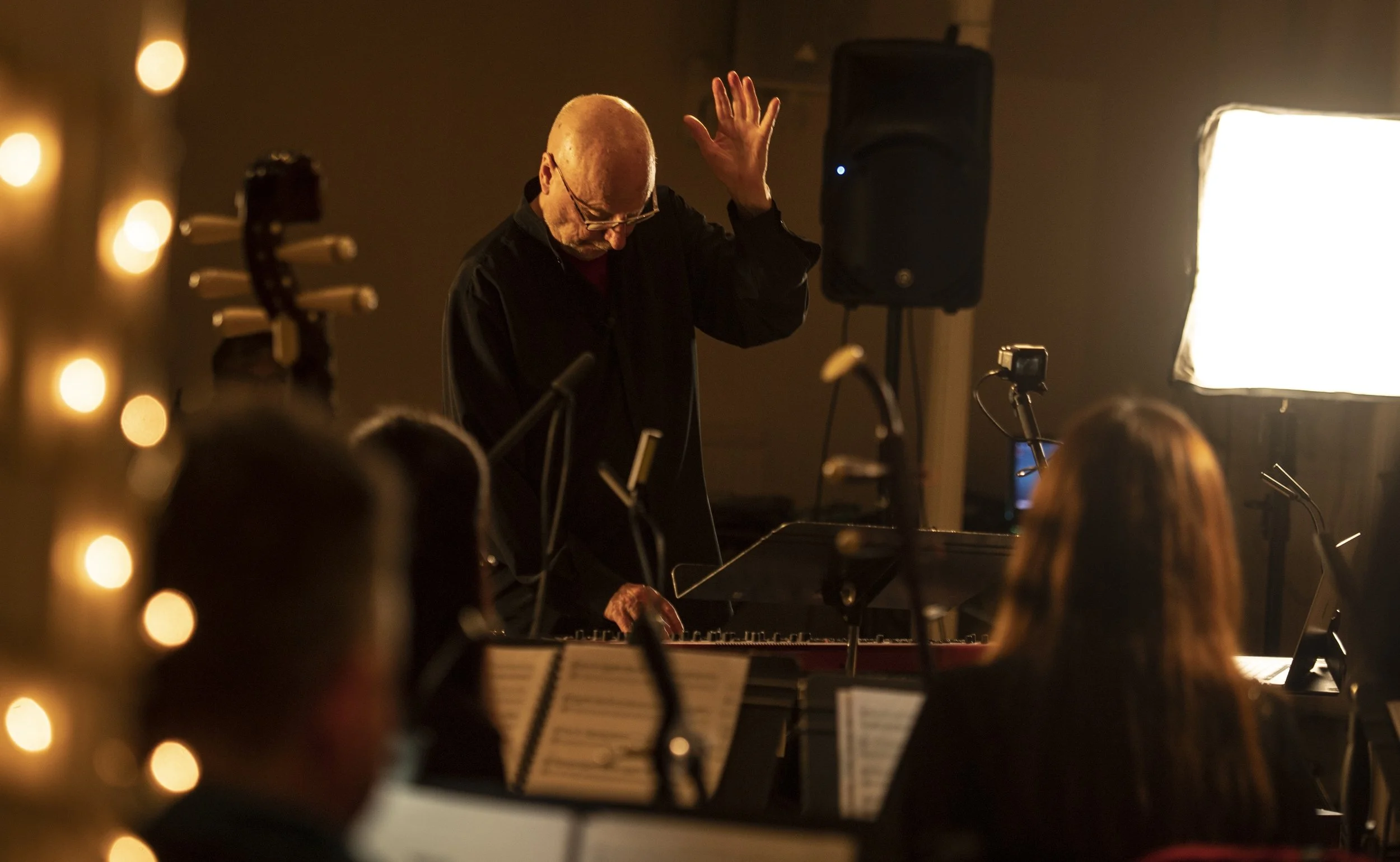
Peter Wiegold
Founder Director
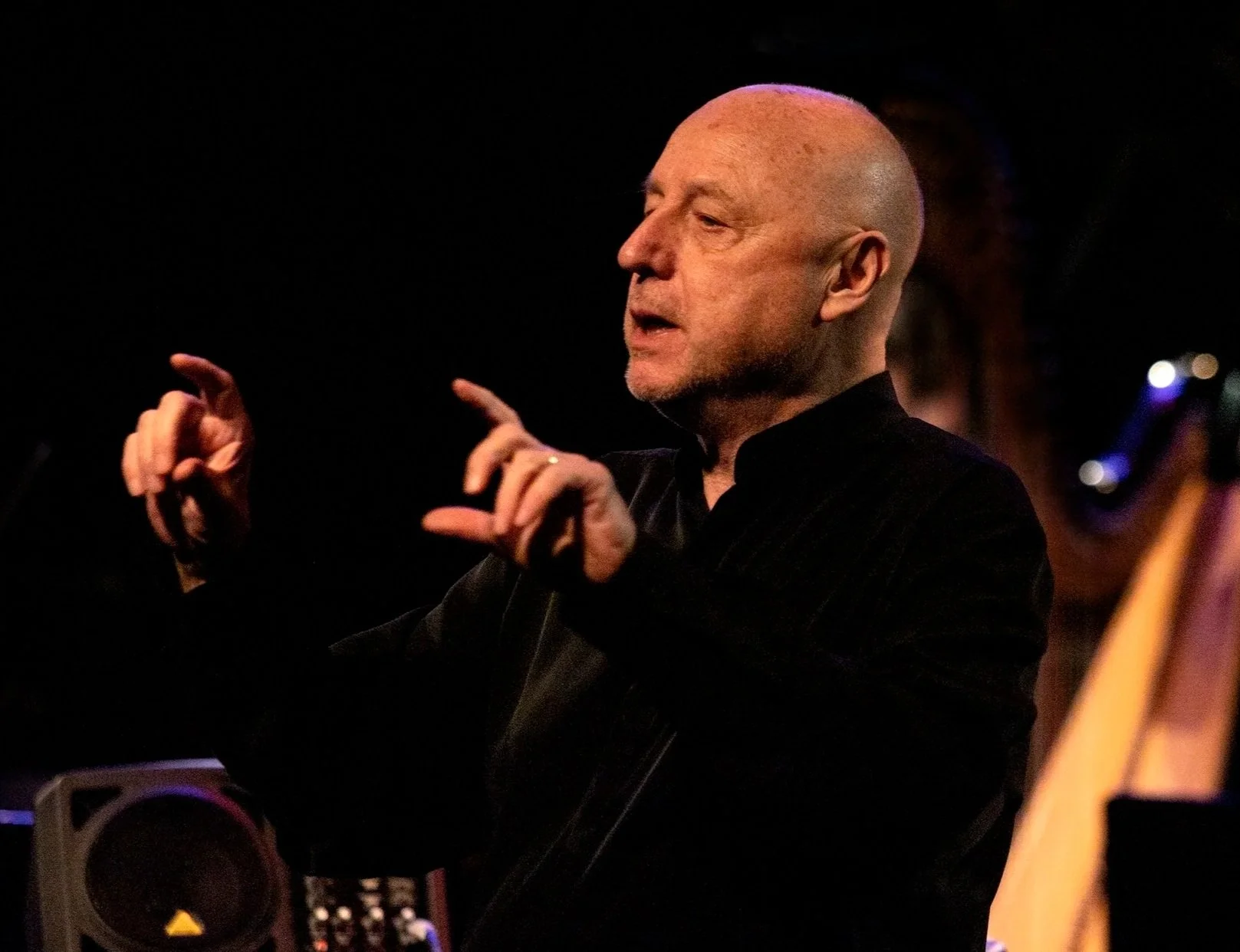
Peter’s story
Peter’s journey to creating Third Orchestra started at the age of 30. In his 20’s he established a well regarded career as a composer and conductor, with many BBC broadcasts, his work published by Universal Edition and so on.
But at the age of 30, he decided to take time out. He had become frustrated by the rigidities of his classical career and decided to explore other kinds of music practice, looking around the world. He studied in Java, visited India and Brazil and worked with many different genres in London, including jazz and African musics. He spent for a year at the Bhavan Centre, London collaborating with sitarist Dipak Choudhry, then Ravi Shankar’s chief disciple.
At that same time he became determined to bring more creativity into what was a very rigid approach to young people’s music education, and his ensemble Gemini became the first to regularly work in schools and community centres across the country, often creating shows with young people.
This was recognised by the Guildhall School of Music, and he was invited to join educationalist Peter Renshaw in the creation of their Performance and Communication Skills Department. This quickly became a 2 1/2 day a week postgraduate course, a kind of laboratory for examining creative and community methodology, looking for a new kind of inclusive artist. His motto was that, as people left the course, they should be able to go into any room anywhere and make music. Several of the alumni have gone on to senior educational positions.
The project led to Peter teaching leading a parallel course in Toronto for several seasons and then crossing Canada for Orchestras Canada to train 15 Orchestras in workshop techniques. He was also the first trainer of many UK Orchestras including LSO, RPO, RSNO and City of London Sinfonia. Amongst many international projects he twice led projects in Japan with members of the London Sinfonietta, working with traditional musicians, classical musicians, teachers and young people.
After this time he continued balancing his composing, conducting and workshop career, at one point conducting Boulez in front of Boulez in the BBC Proms. As Artist-in-Association with Birmingham Contemporary Music Group he directed a show in the vast exhibition centre, with Bruno Maderna’s Serenade for a Satellite, Berio’s Accordo for four wind orchestras and Salvatore Sciarrino’s La bocca, i piedi, il suono for 100 saxophones.
He has been commissioned by the BBC - including “He is rumoured without’ a piece for 150 musicians for the Albert Hall Proms including musicians from Uzbekistan the BBC Philharmonic and the Coldstream Guards - and the London Symphony and Royal Philharmonic orchestras, London Sinfonietta and Composer’s Ensemble. A notable premiere was ‘Earth, receive an honoured guest’ for cor anglais and string trio at the Dartington International Summer School. As a conductor of new music he has given over 100 premieres.
Wanting to bring his primary focus to cross-genre and cross-cultural collaboration, in 2011 along with composer/pianist Martin Butler he formed Club Inégales in London. In over 100 gigs, this brought together a world of artists playing alongside house band Notes Inégales. Guests included guitarist Lionel Loueke, radical pop Gazelle Twin, Maori shaman Horo Horomona, English folk trio, Leveret, Will Self and Benjamin Zephaniah.
The Third Orchestra emerged from this wonderful crucible!
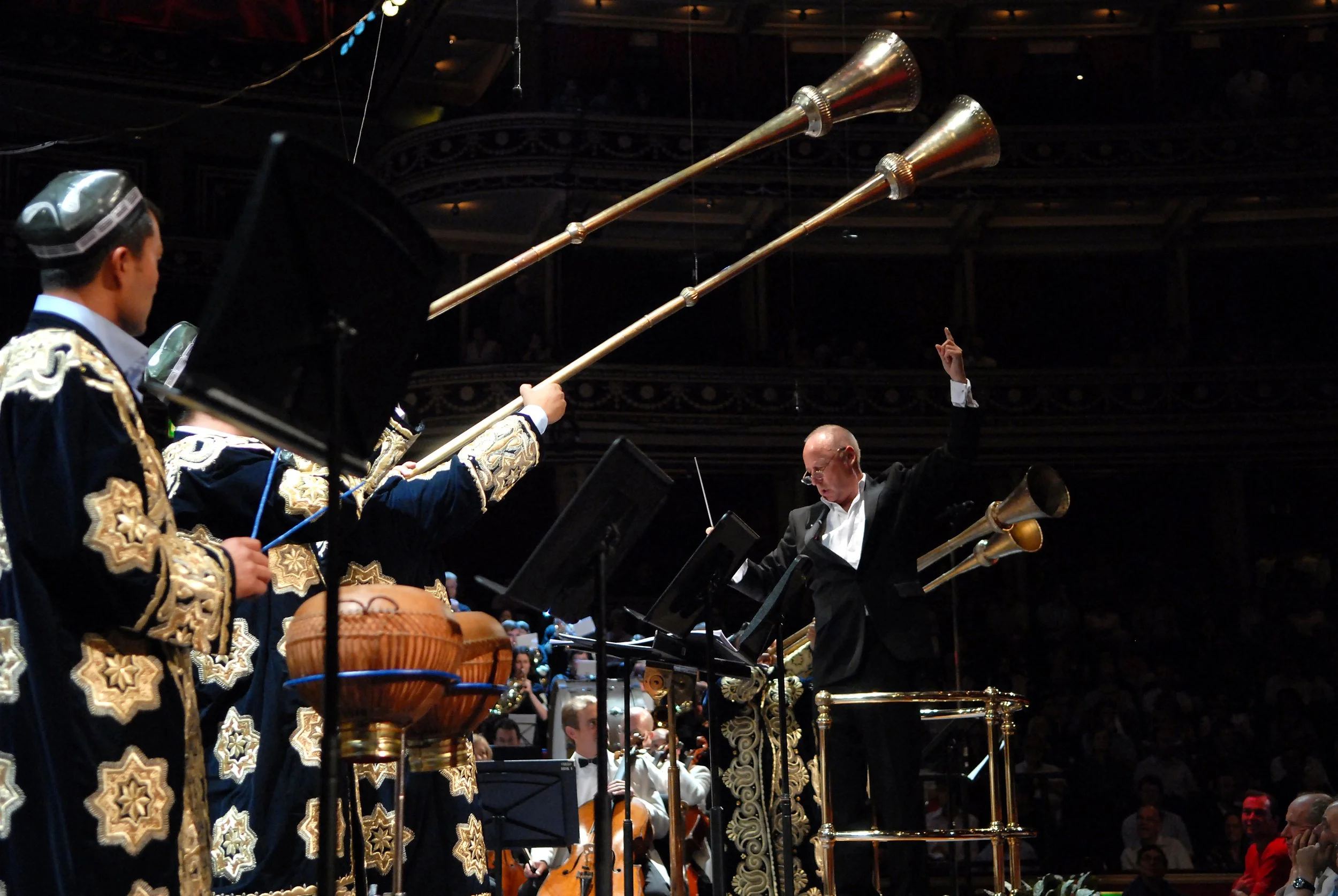
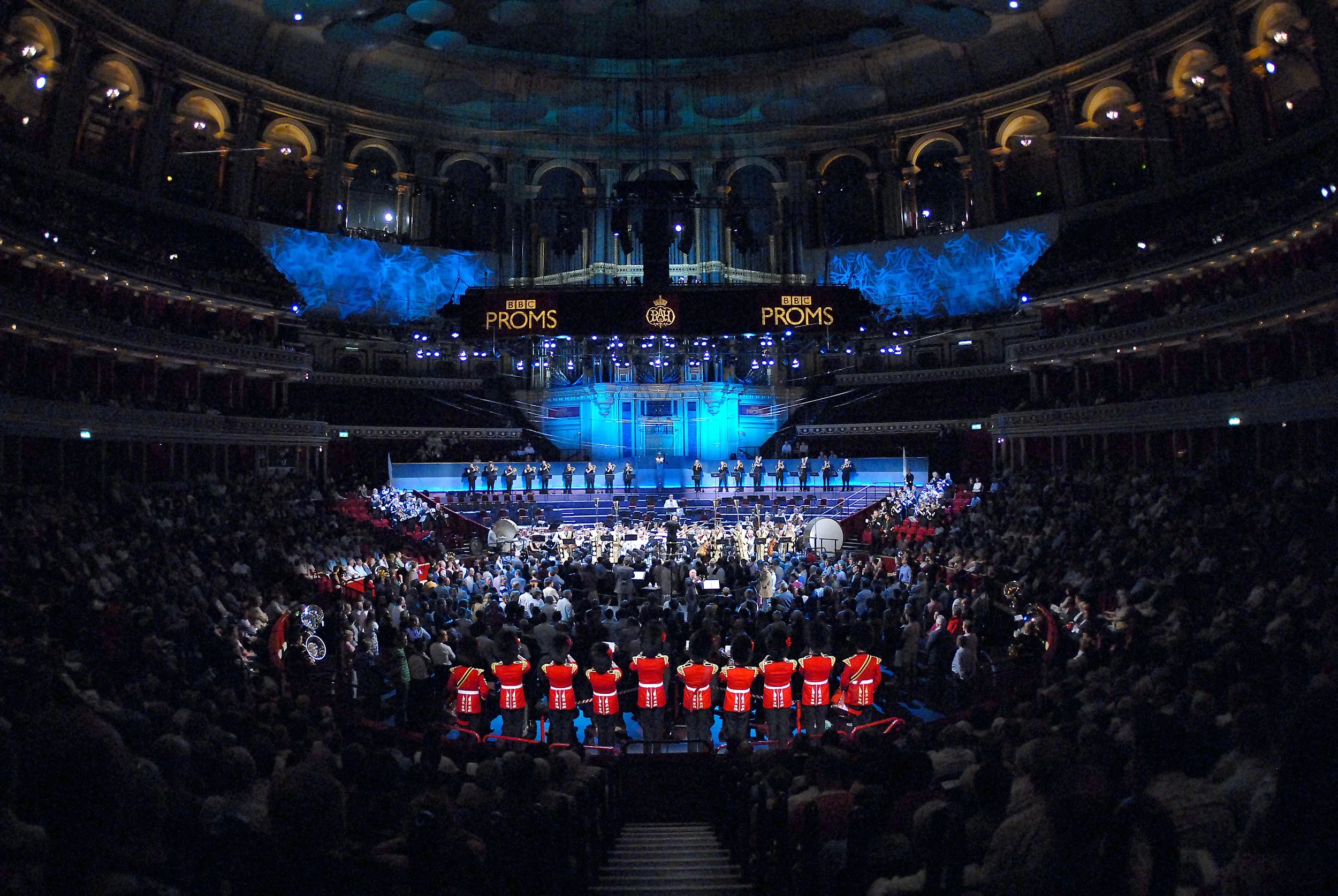
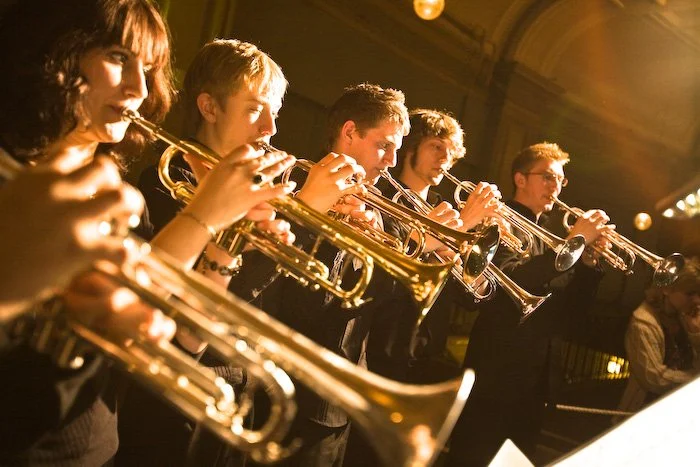
Photos from ‘He is Armoured Without’, BBC PromsPeter writes:
Pausing my conventional career in my early 30’s represented the beginning of a long search.
I felt I wanted to discover how other kinds of music across the world worked. I wanted to cultivate a new musical practice that could embrace every person and every music, that were together in a room. Then, at the same time, as an artist, I continued to seek a certain sound, a distinct expressive quality.
There is a kind of paradox here. Club Inégales guitarist Joel Bell once wrote that, “within 10’ of leading a new group, wherever they are from, Peter’s sound comes into the room”. Our advisor Mathieu Bossano said that the more different musics there are in the room, “the more it sounds like Peter”. While Korean taegum flute Hyelim Kim said that the Third Orchestra was a place in the West where she felt able to be Korean.
I have discovered that my joy is in these paradoxes, in that multiplicity - that I strive for a kind of liminal space where ‘both’ things are possible. The wide embrace of the orchestra has become the vehicle in which I could bring this vision to fruition.
The vision also aligns with deeply felt human and spiritual values - about respect, diversity, the value of every culture - and the possibility of individual imagination and empowerment. Of new kinds of leadership, of the potential for radical change in the world.
Together with a Taoist-like understanding of the ever evolving nature of identity, flow and form.
My Western musical influences have included Henry Purcell, Mahler, Stravinsky, Berio, Miles Davis, the Beatles.. It could be said that there’s a ‘thirdness’ about all of them!
I did struggle with the nature of my conventional classical career in my 20s. My memories of this long journey often return to key experiences, key lessons, moments that gradually reframed how I saw the world, and helped me forge a new practice and aesthetic.
Some of these are below.
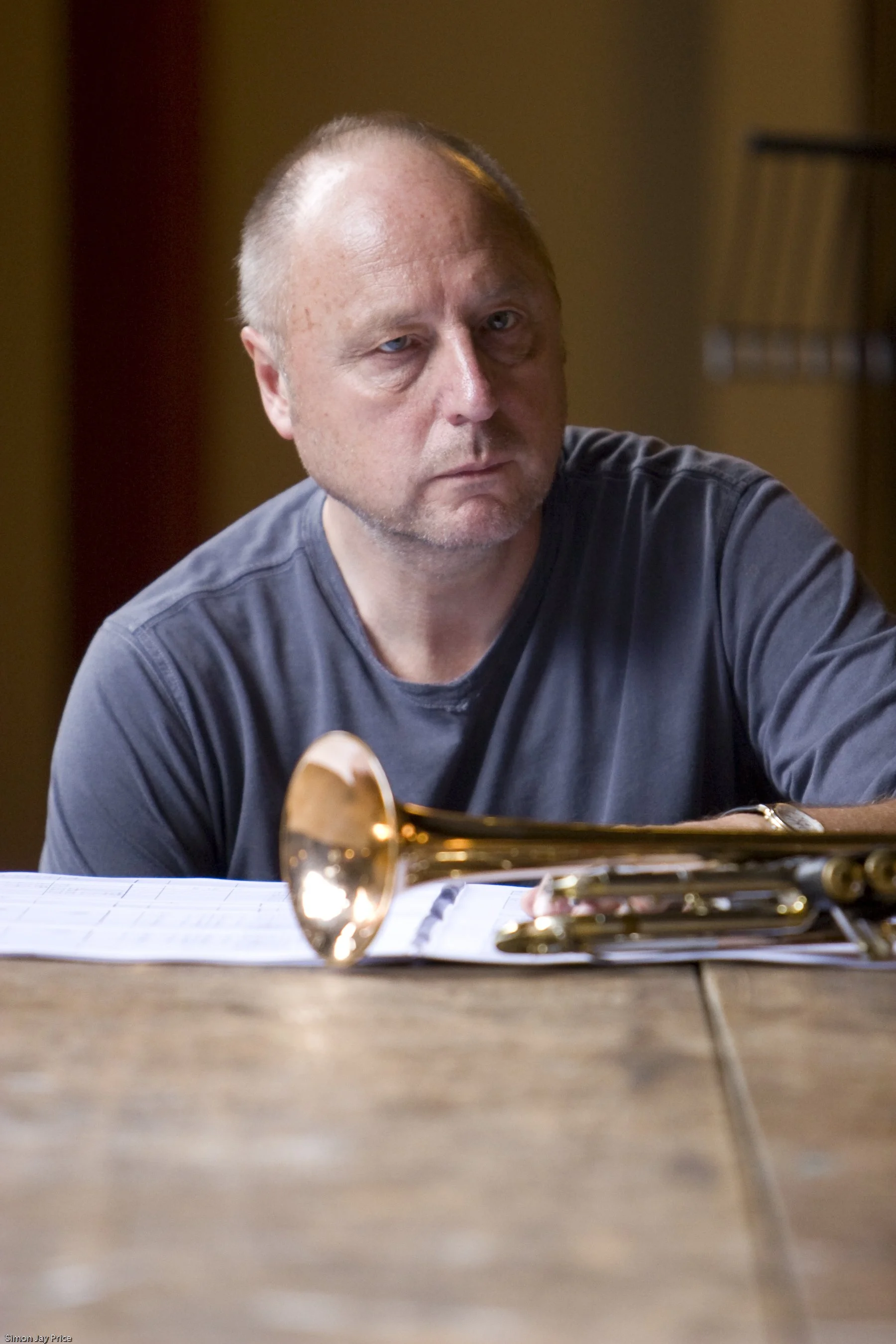
In rehearsal for ‘He is Armoured Without’,
BBC Proms
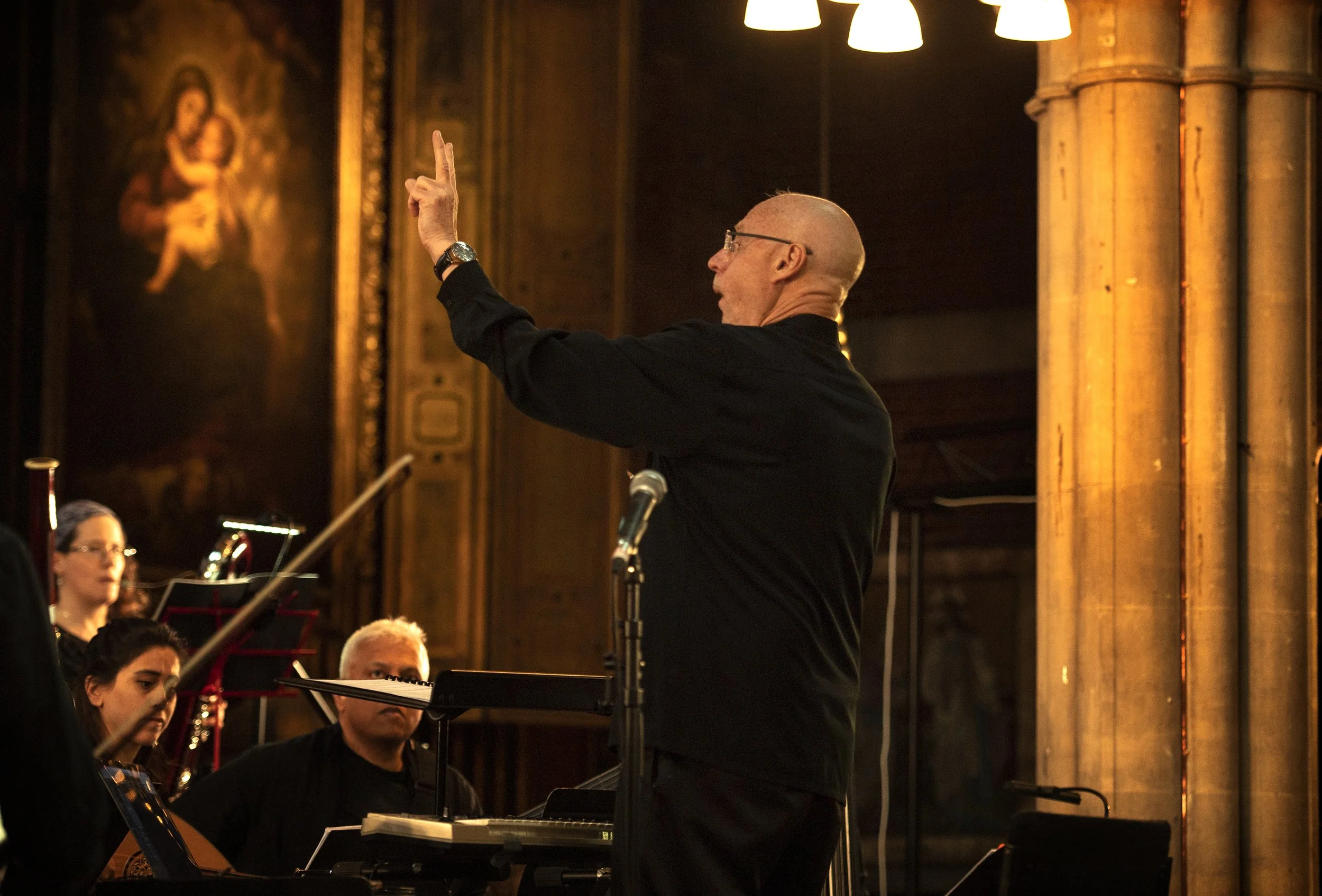
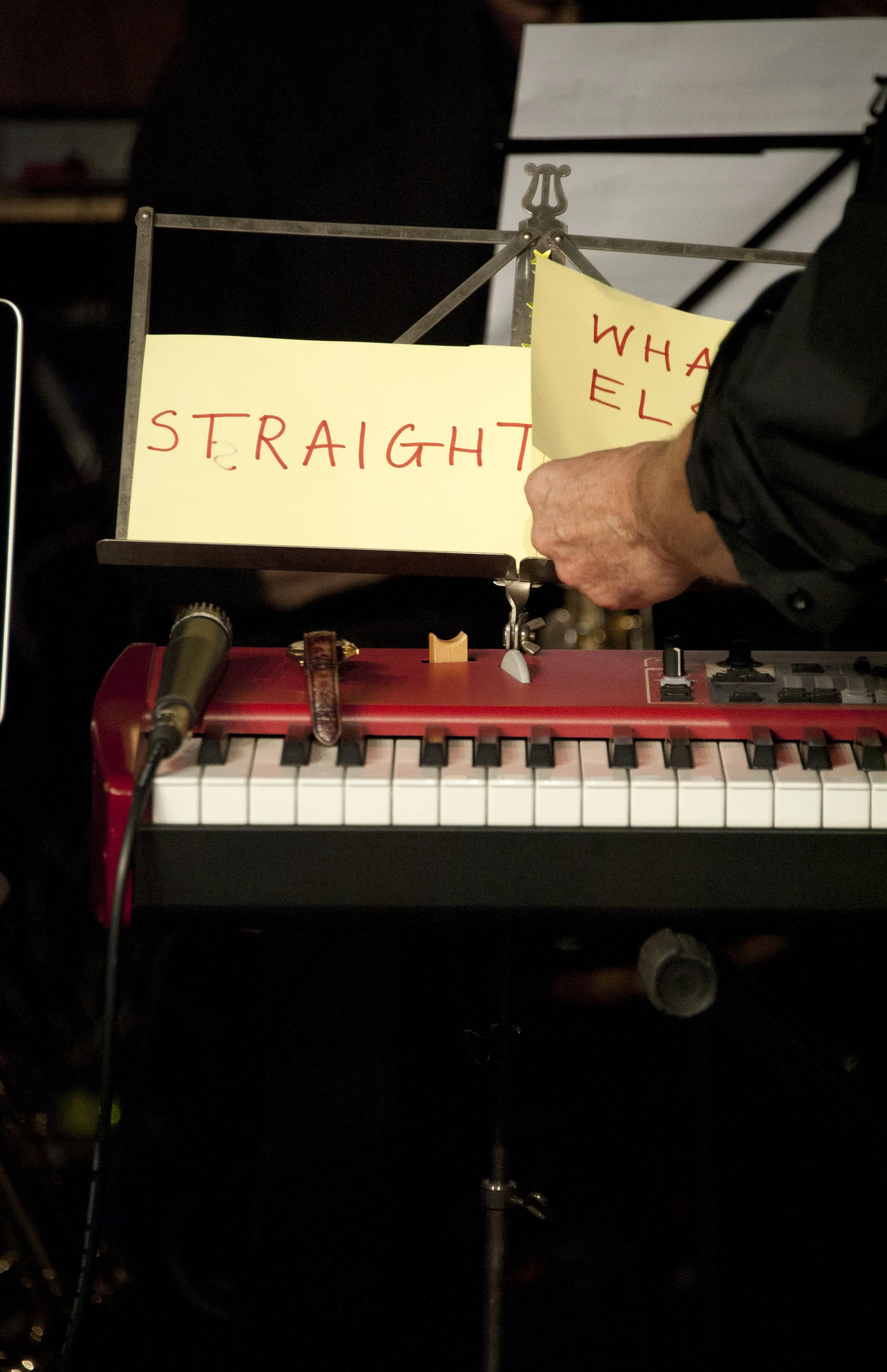
A favourite story
“Peter changes his mind”
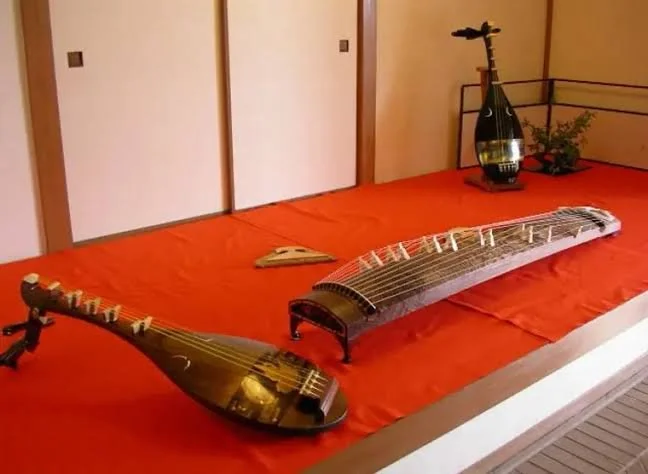
Working in Japan along with a team from the London Sinfonietta, with a mixed group of traditional musicians, classical musicians and teachers, they were first expecting to be instructed.
Then we introduced the idea of improvisation, and after a while they joined that with great delight. But then I began to shape the improvisation. Can you add this here? Can you copy that?
This led to quite a bit of confusion. But then they invented a third category: 'Peter changes his mind'. Now everyone was happy - there were three clear categories - instruction - improvisation - Peter changes his mind.
Stand before it and there is no beginning.
Follow it and there is no end.
Move with the present.
Tao te Ching 
“Don’t swap one tyranny for another”
After having received a meditation mantra at the Study Society, West London, I about to leave when the instructor said, “remember, don’t swap one tyranny for another”.
I constantly remember this. Anything can become a tyranny - a kind of improv,, a stylistic norm. being fixed on a particular player’s role.
I sometimes about leading, ‘keep moving the goalposts’. Not to be gratuitous, but to constantly seek a place where every choice is pristine, as if for the first time.
Marshall Marcus
“I've only ever had one idea'“
Invited by my Head of School as a Professor at Brunel University to discuss research plans for the coming year, I said, ‘but Bill, I’ve only ever had one idea’.
Suddenly I knew the work had always been about thresholds, boundaries.
“Encourage the opposite tendency”
This was a motto of Dr. Bach of the Bach Flower Remedies. To me this reminds to explore the other in yourself, and with collaborators . It is always easy to sit with bias.
Dr. Bach also said, “take care of that child, they may be older than you are”. I have always tried to trust the wisdom of the person in front of me, whether a young child or a world-leading artist.
“Rooted in the earth, open to the sky”
A flamenco saying: Fire, passion, on a ground that could lift anywhere.
Marshall